
Quick answer
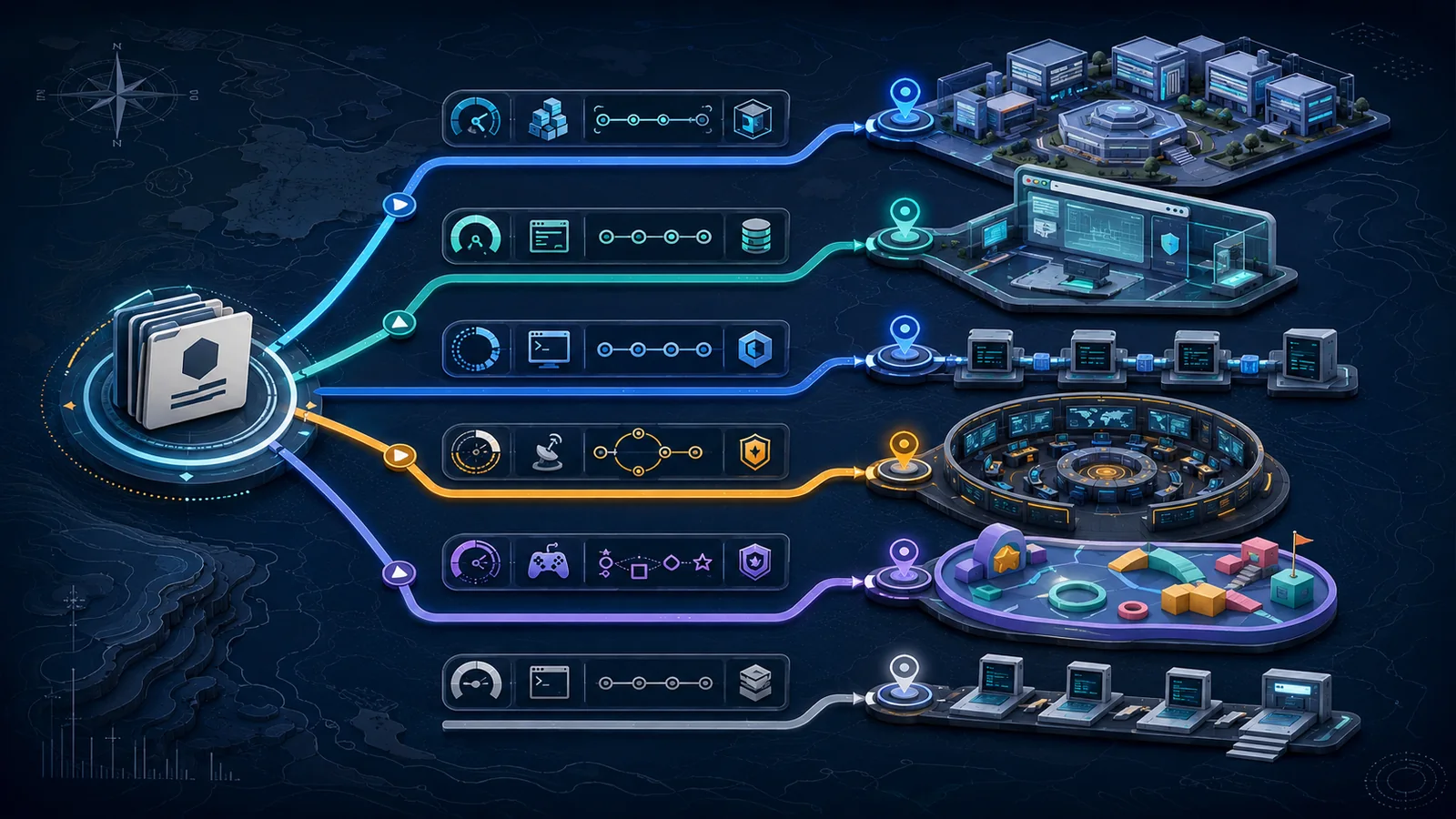
There is no one-for-one TryHackMe replacement. Inspect Hack The Box Academy for broad, structured technical depth; PortSwigger Web Security Academy for web application security; LetsDefend for blue-team and simulated-SOC practice; pwn.college for ordered systems and CTF-style challenges; CyLab Security Academy/picoCTF for challenge-based practice; and OverTheWire Bandit for command-line fundamentals.
Choose by the practice job you need, then verify guidance level, workspace setup, free-entry limits, progress model, and topic scope. This is an E1 source-led comparison: none of the platforms was used directly, so reliability, support, accessibility, device fit, and personal learning fit remain unknown.
Evidence and scope
- Evidence profile
- Source-led research (E1) — official-source alternatives guide with dated checks
- Information checked
- Target market
- United States primary; English-language individual learners
- Direct evaluation
- Not performed
- Included alternatives
- Hack The Box Academy, PortSwigger Web Security Academy, pwn.college, LetsDefend, CyLab Security Academy/picoCTF, and OverTheWire Bandit
- Main limitation
- No account, course, lab, workspace, support channel, accessibility flow, device flow, checkout, cancellation, migration, or learner outcome was directly tested.
This guide compares documented learning structure and practice access, not teaching quality or a universal winner. TryHackMe is the baseline job-to-be-done because its official materials combine learning paths, walkthrough and challenge rooms, browser-based AttackBox access, and a substantial free-room catalog. TryHackMe’s room documentation, AttackBox guide, and free-room page were used only to define that baseline.
Key facts before you shortlist anything
- TryHackMe mixes structured learning paths with walkthrough, challenge, and network rooms; its AttackBox runs in the browser, while a local machine can connect by VPN.
- Hack The Box Academy is a structured school-like product; HTB Labs is a separate, more independent practice environment.
- PortSwigger Web Security Academy is focused on web application security rather than broad cybersecurity coverage.
- pwn.college and OverTheWire expect more command-line independence than a walkthrough-heavy path.
- LetsDefend is a blue-team specialist; its announced Hack The Box integration and current account path are transition details to verify.
- picoCTF.org is transitioning to CyLab Security Academy; existing pre-transition credentials and progress are described as preserved.
- Free entry proves that you can inspect part of a product. It does not prove the value of paid access or the quality of the complete learner experience.
Define the replacement job before comparing platforms
“Alternative to TryHackMe” is too broad to be a useful requirement. Start with the cybersecurity learning-path guide to define the starting direction, then use the current TryHackMe product analysis, which documents a public model spanning beginner and specialist paths, theoretical tasks, guided walkthroughs, independent challenges, browser workspaces, VPN-connected machines, and free and paid access. Its Cyber Security 101 path is a broad beginner curriculum, while the room model separates walkthrough, challenge, and network practice.
Write one primary replacement job before opening another platform:
- Broad curriculum: “I need a guided sequence across several cybersecurity domains.”
- Web security: “I need explanations and realistic web vulnerability labs.”
- Blue team: “I need to investigate alerts and incidents in a simulated SOC.”
- Systems and exploitation: “I need ordered command-line and low-level challenges.”
- CTF practice: “I need safe, self-paced challenges across multiple categories.”
- Linux fundamentals: “I need a linear SSH wargame that forces me to learn basic commands.”
This article does not compare exact checkout totals, award a score, or claim that one platform teaches more effectively. It identifies documented models that can satisfy different parts of the same job.
Use the same seven criteria for every option
1. Topic scope
Separate broad cybersecurity platforms from specialist resources. A web-security academy can be excellent for its defined subject and still be the wrong substitute for someone seeking networking, Windows, SOC, and cloud coverage in one path.
2. Guidance-to-independence ratio
Record whether the sequence uses explanations, demonstrations, walkthroughs, hints, assessment questions, or challenge-only progression. A learner who still needs worked examples should not treat a minimally guided wargame as equivalent to a walkthrough path.
3. Workspace and setup
Check whether practice runs in a browser terminal, browser desktop, provider lab, webshell, local terminal, SSH session, or VPN-connected environment. Setup friction is part of the product decision, not a minor implementation detail.
4. Progress and continuity
Verify whether the product records path, module, lab, challenge, or level completion. Progress markers can support planning, but they are not proof of job readiness, credential value, or employer recognition.
5. Free-entry and paid-access boundary
Identify exactly what can be inspected without payment and which content, paths, alerts, workspaces, or assessments require an account or plan. Do not infer the whole paid experience from one free room, starter module, or public challenge.
6. Current entity and migration state
Account systems and product names can change. LetsDefend has announced that it joined Hack The Box, while its account path and plan boundaries remain transition details; picoCTF.org currently directs learners to CyLab Security Academy. Recheck login, progress, and access behavior before investing time in a long sequence.
7. Authorization and safe targets
Use only the targets, labs, challenge hosts, and connection methods the provider explicitly supplies. Never convert a training technique into testing against a public system without permission.
Documented alternatives at a glance
On a small screen, swipe or scroll the table horizontally to compare all columns.
| Alternative | Documented focus | Guidance and structure | Practice access | Boundary to verify |
|---|---|---|---|---|
| Hack The Box Academy | Broad technical cybersecurity curriculum | Paths group Modules; Modules contain sequential Sections with theory and interactive assessments | Pwnbox in interactive sections or a local machine through Academy VPN | Academy and HTB Labs are separate products; module tiers, Cubes, and subscriptions affect access |
| PortSwigger Web Security Academy | Web application security | Curated learning paths combine explanations, videos, and realistic labs | Online labs; some exercises use Burp Suite tools | Specialist scope; not a broad networking, host, SOC, or cloud curriculum |
| pwn.college | Systems, exploitation, and CTF foundations | Ordered dojos, modules, resources, and challenges | Browser terminal, VS Code, Linux desktop, or SSH | Command-line and challenge orientation can require more independence |
| LetsDefend | Blue-team roles and incident analysis | Paths include lessons, quizzes, challenges, and SOC alerts | Simulated SOC; deeper endpoint access is plan-dependent | Basic versus VIP/VIP+ access and HTB-account integration should be rechecked |
| CyLab Security Academy / picoCTF | Challenge-based practice across cybersecurity categories | Primer material, practice challenges, and competition/classroom routes | Challenge library and webshell; some challenges may require additional tools | Platform transition and login path are current volatile details |
| OverTheWire Bandit | Linux and command-line fundamentals | Linear levels with goals and suggested commands | SSH from a local terminal | Minimal integrated instruction, no all-in-one browser workspace, and manual note keeping |
The table is a routing aid, not a scorecard. “More structured” and “more independent” are different practice models, not automatic quality grades. Use the pre-subscription lab-evaluation checklist before paying for an option.
Inspect the alternatives by job-to-be-done
Hack The Box Academy: structured depth with a separate lab ecosystem
HTB Academy is the closest option in this set to a broad, structured technical school. Its official documentation organizes content into Paths, Modules, and Sections. Many Sections combine detailed reading with target systems and assessment questions, while role and skill Paths place Modules in a recommended order. HTB’s Academy introduction also distinguishes Academy from HTB Labs: Academy teaches concepts with guided material, while the main Labs platform emphasizes more independent black-box practice.
Workspace choice is explicit. Interactive Academy sections can use the provider’s Pwnbox or a local virtual machine connected with an OpenVPN file. The Academy VPN guide documents both routes. Tier 0 starter Modules are described as effectively free through the Cube-return model, but broader module and path access depends on the current account and subscription rules. The Modules and Paths guide should be rechecked before choosing a long path.
Inspect HTB Academy first when the requirement is broad technical depth and a structured sequence, not when the primary need is a lightweight browser-only beginner experience or defensive SOC simulation.
PortSwigger Web Security Academy: a specialist web-security route
PortSwigger’s Web Security Academy is a specialist alternative for learners who can narrow the job to web application security. The Academy home page describes free interactive labs, progress tracking, and continuously updated learning material. The learning-path directory organizes content into curated sequences, while the getting-started guide explains a read, practice, and track cycle.
This is not a broad substitute for networking, Windows, Linux administration, SOC operations, or cloud security. It is a strong documented match only when the primary job is learning web vulnerabilities and practicing them in provider-hosted labs. Some labs require security-testing tools; PortSwigger states that Burp Suite Community Edition can be used where professional access is unavailable.
pwn.college: ordered systems and CTF-style practice
pwn.college describes itself as a free, open cybersecurity education platform created at Arizona State University. Its welcome page frames the curriculum as hands-on practice intended to move a beginner toward solving simple CTFs and wargames. The current dojo directory says material is designed to be tackled in order and separates getting-started material from a core curriculum.
The workspace options are unusually explicit: the Using the Dojo module documents a browser terminal, browser-based VS Code, a Linux GUI desktop, and SSH. Each dojo contains Modules and Challenges, so the learner must solve problems rather than only read explanations.
Inspect pwn.college when the target is systems, program behavior, exploitation, and CTF-style problem solving. The challenge emphasis and Linux assumptions make it a different starting point from a walkthrough-heavy general curriculum.
LetsDefend: blue-team paths and simulated SOC practice
LetsDefend is a specialist route for defensive security. Its learning-path guide lists paths for students, SOC analysts, incident responders, detection engineering, and malware analysis, with lessons, quizzes, challenges, and SOC alerts. Its VIP/VIP+ documentation describes a simulated SOC environment and deeper endpoint access in VIP+.
A Basic account is documented as free, with access to free courses, challenges, quizzes, and up to 15 SOC Analyst alerts per month. LetsDefend’s access summary says paid tiers unlock additional content and features. The exact price, plan contents, and account behavior were not verified through checkout.
Entity state is also material. LetsDefend announced that it joined Hack The Box, while its homepage now describes an acquisition agreement; treat account and sign-in integration as a current transition detail to recheck. Inspect LetsDefend when the replacement job is defensive alert investigation, not when the learner wants a broad offensive curriculum.
CyLab Security Academy and picoCTF: self-paced challenge practice
The current picoCTF home page states that picoCTF.org is now CyLab Security Academy, Carnegie Mellon University’s free cybersecurity learning platform. It says accounts created before May 8, 2026 can retain progress, achievements, and history. The transition notice makes login and naming a current detail that should be rechecked before a classroom or long study plan.
The legacy getting-started guide describes picoGym as a noncompetitive, self-paced practice space with previously released and new challenges in a safe environment. It also describes picoPrimer material, classroom progress tracking, a webshell, and challenge categories that extend beyond one narrow topic.
Inspect this route when the learner wants challenge-based practice, classroom support, or CTF preparation. It is not presented here as a complete replacement for a step-by-step career curriculum.
OverTheWire Bandit: command-line fundamentals through linear levels
OverTheWire’s Bandit page says the wargame is aimed at absolute beginners and is organized in levels. Each completed level reveals the information required to start the next. The first level begins with an SSH login, and subsequent pages provide a goal, suggested commands, and supporting reading.
Bandit is useful when the exact job is becoming comfortable with Linux, SSH, files, text processing, and independent troubleshooting. It does not provide the same browser-hosted all-in-one workspace, broad path catalog, or integrated explanation layer as TryHackMe. Learners must manage terminal access and notes themselves.
What remains unverified
- Teaching quality: No lesson, hint, walkthrough, assessment, or challenge was completed.
- Reliability and latency: No workspace, VPN, SSH, target, webshell, or simulated SOC session was launched.
- Support: No ticket, community question, or response-time workflow was tested.
- Accessibility and devices: Keyboard, screen reader, caption, contrast, mobile, low-bandwidth, and browser compatibility were not evaluated.
- Paid value: No subscription was purchased, no checkout was observed, and no refund or cancellation workflow was exercised.
- Progress migration: LetsDefend/HTB account integration and picoCTF/CyLab transition behavior were not tested with a real account.
- Outcomes: Certificates, badges, points, belts, levels, and completion records are not treated as proof of employment, salary, exam success, or job readiness.
- Personal fit: A source-led model comparison cannot determine whether the pacing, explanations, difficulty, or motivation system will work for a particular learner.
Build a two-option inspection plan
- Write one primary replacement job and one secondary job.
- Choose two options that use different practice models rather than six near-duplicates.
- Open the current official start page and confirm the path, module, challenge, workspace, and account state.
- Use only free or public entry points until you can explain what a paid plan would add.
- Complete one small authorized activity on each option when direct evaluation is approved for your own decision.
- Record setup time, guidance level, independent work, progress behavior, and the next paid boundary.
- Use a separate pre-subscription lab-evaluation checklist before committing money or a long study period.
A valid result may be “use a specialist free resource beside TryHackMe,” “replace TryHackMe for one subject only,” or “do not switch yet.” An alternatives guide should narrow the next test, not force a platform winner. If a course and lab need to be combined, use the course-and-lab study-plan workflow as a separate planning step.
Methodology
We defined the job-to-be-done from TryHackMe’s current official room, path, workspace, and free-entry documentation, using the Course Evidence source-led method. An option was included only when current official pages documented: an active individual-learning route; hands-on labs, targets, alerts, or challenges; a sequence such as paths, modules, dojos, levels, or guided topics; and a safe provider-controlled environment.
We excluded pure video libraries, course marketplaces without a consistent lab model, enterprise-only products, unstructured machine repositories, event-only CTFs, and alternatives whose current status could not be verified from an official source. The six included options are representative, not exhaustive.
Evidence labels are limited to official-source facts and qualified editorial synthesis. No access, direct evaluation, original learner research, price checkout, support test, or outcome study was performed. All material product and migration facts were rechecked against the listed official sources on September 10, 2026; volatile access and migration details require recheck before a later update.
Sources
- TryHackMe Help Center — Rooms
- TryHackMe Help Center — The AttackBox Explained
- TryHackMe — Free Rooms
- TryHackMe — Cyber Security 101
- Hack The Box Help Center — Introduction to HTB Academy
- Hack The Box Help Center — Academy Modules & Paths
- Hack The Box Help Center — Connecting to Academy VPN
- PortSwigger — Web Security Academy
- PortSwigger — Web Security Academy Learning Paths
- PortSwigger — Getting Started with the Web Security Academy
- pwn.college — Welcome
- pwn.college — Dojos
- pwn.college — Using the Dojo
- LetsDefend — Hands-On Blue Team Training
- LetsDefend Help Center — Picking Your Learning Path
- LetsDefend Help Center — Price of LetsDefend
- LetsDefend Help Center — VIP and VIP+
- LetsDefend — Joining Hack The Box
- CyLab Security Academy — picoCTF transition notice
- picoCTF — Getting Started and picoGym
- OverTheWire — Bandit